24 Sep 2026
Platform Restrictions Influence Approaches to Jackpot Hunting on Mobile Gaming Devices

Platform constraints in handheld environments continue to direct how players approach jackpot chasing, with screen dimensions, processing power, and connectivity rules creating specific boundaries that shape betting sequences and session structures. Data from industry reports in September 2026 show increased adaptation among users who modify their tactics to fit these limits rather than attempting to override them.
Screen Size and Interface Adjustments
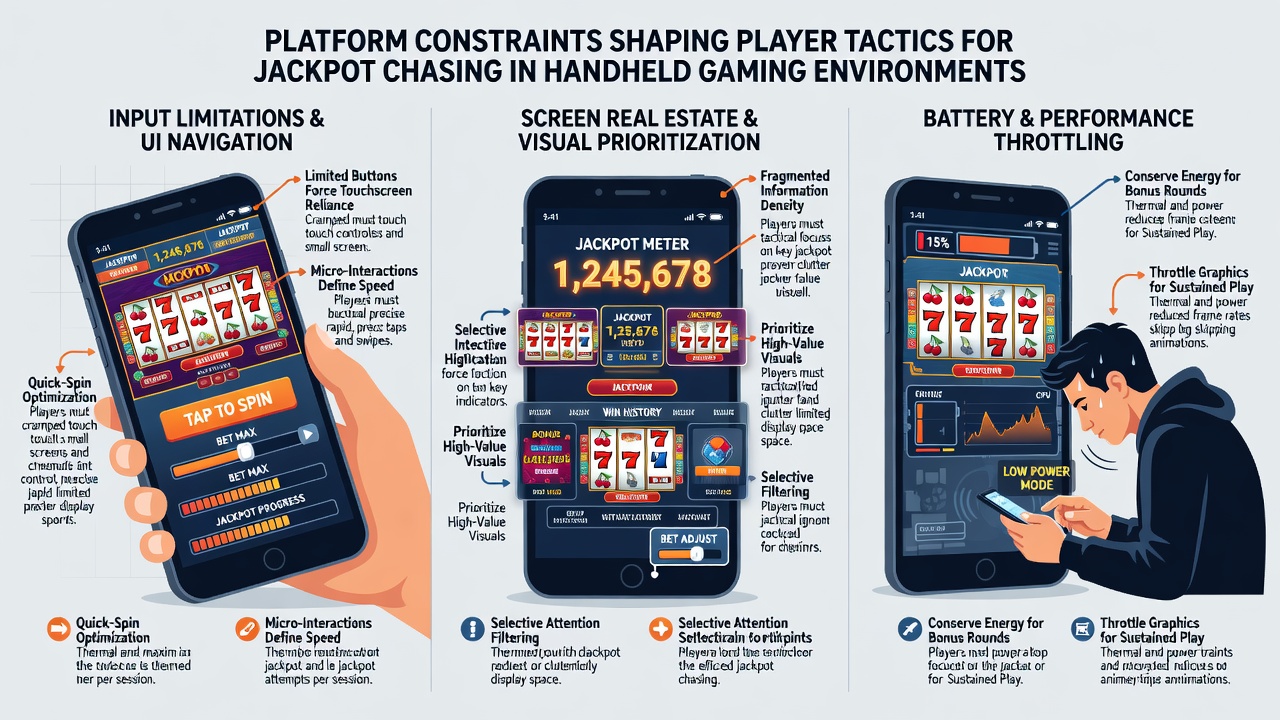
Smaller displays on handheld units require players to prioritize essential jackpot meters and bet controls, which leads many to adopt streamlined sequences that reduce menu navigation while maintaining focus on progressive accumulation. Observers note that touch targets limit rapid adjustments, so participants often pre-set parameters before entering active play and then rely on minimal inputs during extended chases. This pattern appears across multiple device types where resolution differences further influence visibility of secondary features like paytable details or bonus triggers.
Battery Life and Session Timing
Battery capacity on portable devices imposes time-based restrictions that encourage shorter, more concentrated pursuit periods instead of prolonged monitoring. Research indicates users frequently align their jackpot attempts with charging windows or select lower-power modes that sustain longer operation yet reduce graphical intensity. Those who've tracked play patterns report shifts toward burst-style betting during peak battery availability, whereas extended low-power sessions favor conservative stake adjustments that conserve resources while still targeting accumulated prizes.
Network Stability and Data Constraints
Connectivity variations across mobile carriers affect real-time jackpot updates, prompting players to select networks with consistent throughput before committing to high-stakes sequences. Figures from the European Gaming and Betting Association reveal that latency spikes lead participants to pause or scale back bets until stable connections return. Data caps in certain regions add another layer, where users monitor data usage closely and adjust autoplay frequencies to avoid exceeding limits during multi-device jackpot tracking.
Processing Power and Feature Availability
Device processors determine how smoothly complex jackpot animations and simultaneous bonus rounds render, which in turn guides whether players enable full visual effects or opt for simplified modes that maintain performance. Studies from the Canadian Centre for Gaming Research show that lower-end hardware correlates with reduced use of advanced tracking tools, leading participants to rely on external timers or mental counts instead of in-app analytics. This hardware divide creates distinct tactical groups, with high-end device users incorporating more layered strategies while others streamline approaches to match available computational resources.
Touch Controls and Input Patterns
Touch-based input systems favor larger, repeatable actions over precise mouse-like selections, so players often develop habits around swipe gestures and hold functions that integrate directly into jackpot progression mechanics. Those monitoring behavioral data note increased reliance on auto-spin options when manual tapping becomes fatiguing, yet this automation sometimes aligns with platform-enforced speed caps that prevent rapid consecutive bets. The result is a tactical blend where users balance manual intervention for key decisions with automated sequences during less critical phases of the chase.
Regional Platform Variations in September 2026
Updates rolled out in September 2026 across major app stores introduced tighter resource management rules for gaming applications, which further refined how jackpot features load and update on handheld units. Reports compiled by the Australian Communications and Media Authority highlight corresponding changes in player behavior, including more deliberate pre-session planning around device settings and network selection. These adjustments demonstrate ongoing interplay between regulatory environments, manufacturer specifications, and individual tactics without altering core jackpot mechanics themselves.
Conclusion
Platform constraints continue to steer jackpot chasing tactics on handheld devices through measurable influences on interface use, energy management, connectivity choices, and input methods. Evidence from multiple regions confirms that players respond to these boundaries by refining sequences and timing rather than resisting the limitations, producing consistent patterns that evolve alongside hardware and software developments.